

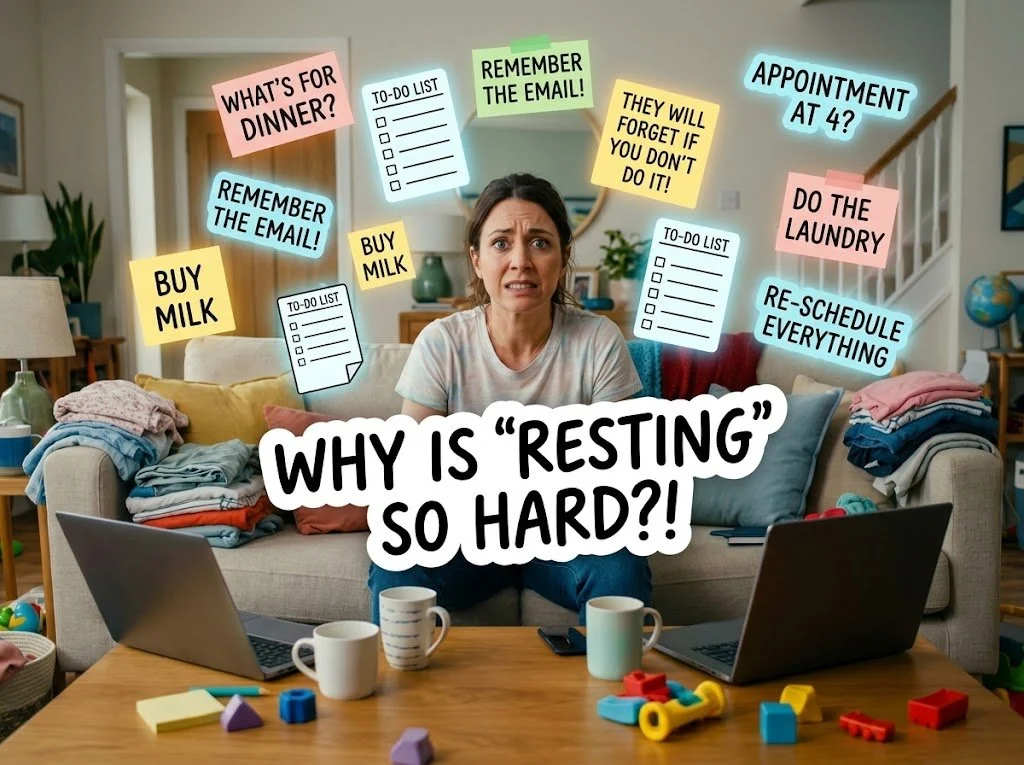
When Responsibility Makes Rest Feel Difficult
Ever sat down to "relax" only for your brain to instantly launch a master to-do list? When responsibility is your default setting, stepping away from the steering wheel can actually feel like a threat. Let’s look at why resting feels so difficult, how overload sneaks into ordinary days, and what you can do to find a little relief—including discovering your unique "Clench Pattern" before you burn out.
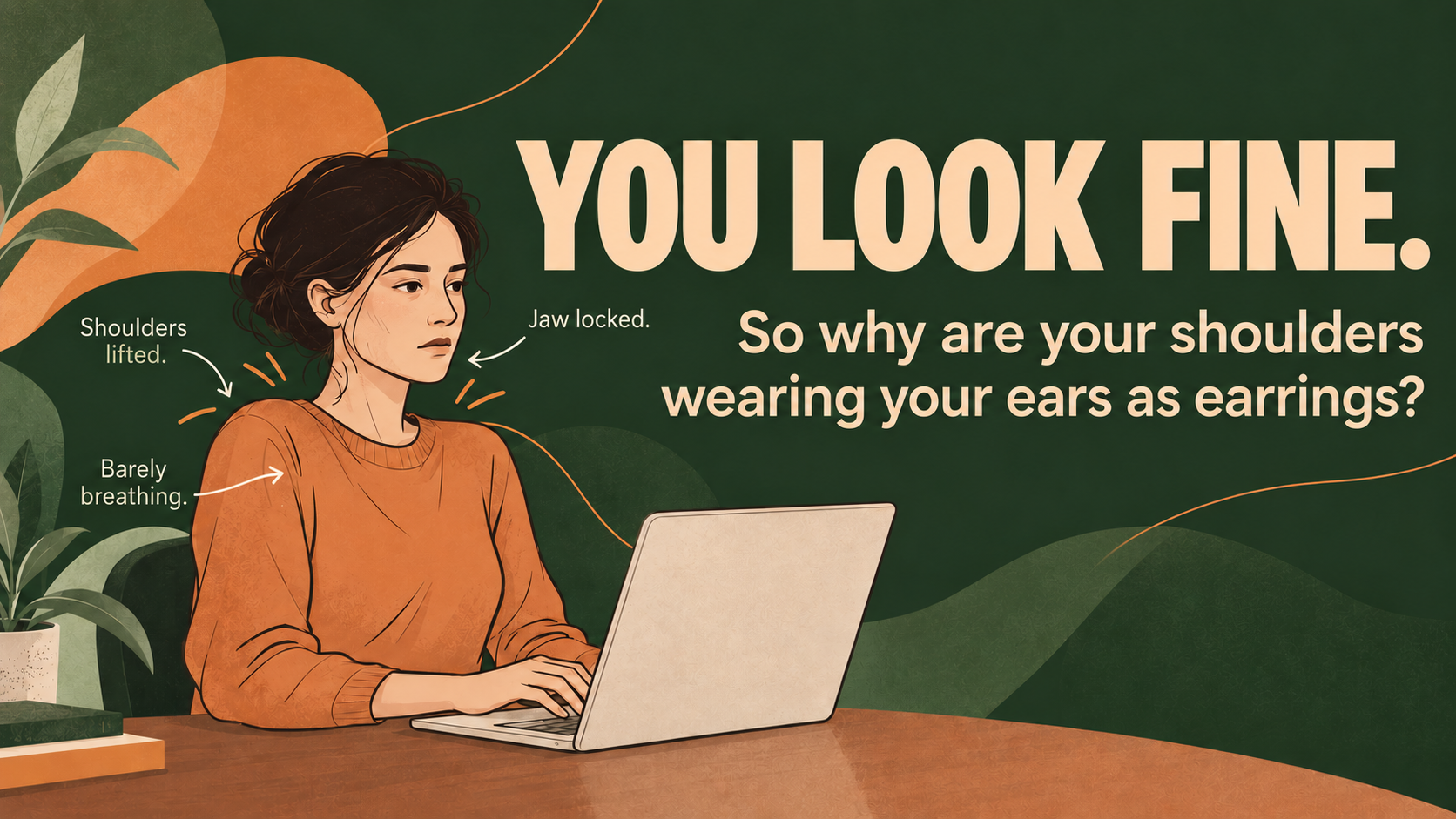
Why You Can Look Fine and Still Feel Braced
You look like you've got it all together. You're answering emails, hitting deadlines, and remembering where everyone left their keys. But on the inside? Your jaw is clenched, your shoulders are wearing your ears as earrings, and your nervous system is wearing full battle armor just to make soup. Welcome to high-functioning bracing—and here’s how we can start letting go.
Insight Is Great. Support Is What Actually Changes Things (How to Choose Your Somatic Path for Q4)
Knowing why you’re overwhelmed doesn’t magically make your body drop out of fight-or-flight when Q4 hits full swing.
Most high-achieving women have tons of insight. We’ve read the books. We know the terms. But insight alone doesn't change your physical reality—support does.
Before the end-of-year rush consumes your entire calendar, take 3 minutes to audit your real capacity and pick a somatic support path that lets you exhale.

Portable Regulation: Staying Centered During High-Stress Travel
"Stop trying to ‘meditate away’ a three-hour flight delay in a loud-ass terminal."
Asking your nervous system to feel zen while trapped in airport chaos is a scam. You don't need a peaceful bubble, a scented candle, or 30 silent minutes to stop spiraling—you just need regulation tools that actually fit in your back pocket when everything goes completely off the rails.
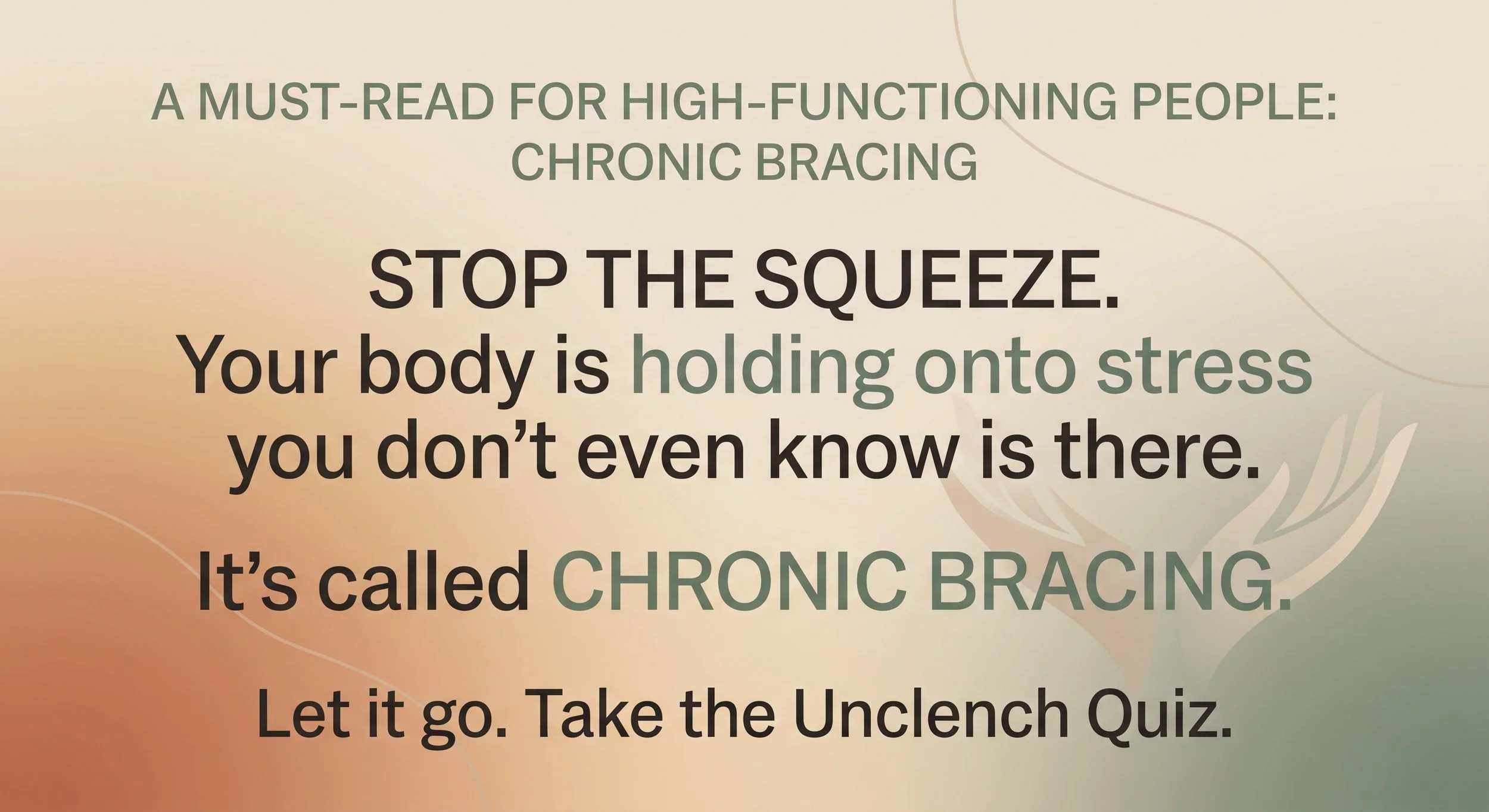
Why High-Functioning People Suffer from Chronic Bracing
Your jaw is snitching on you. You can tell everyone you're "fine" all day long, but your locked shoulders, clenched teeth, and shallow breathing prove your nervous system is wearing a tiny helmet waiting for impact. Chronic bracing isn't a personality flaw—it's raw data. Stop forcing your body to "just relax" and start listening to what it’s holding onto. Read the post and take the Unclench Quiz to break the cycle.
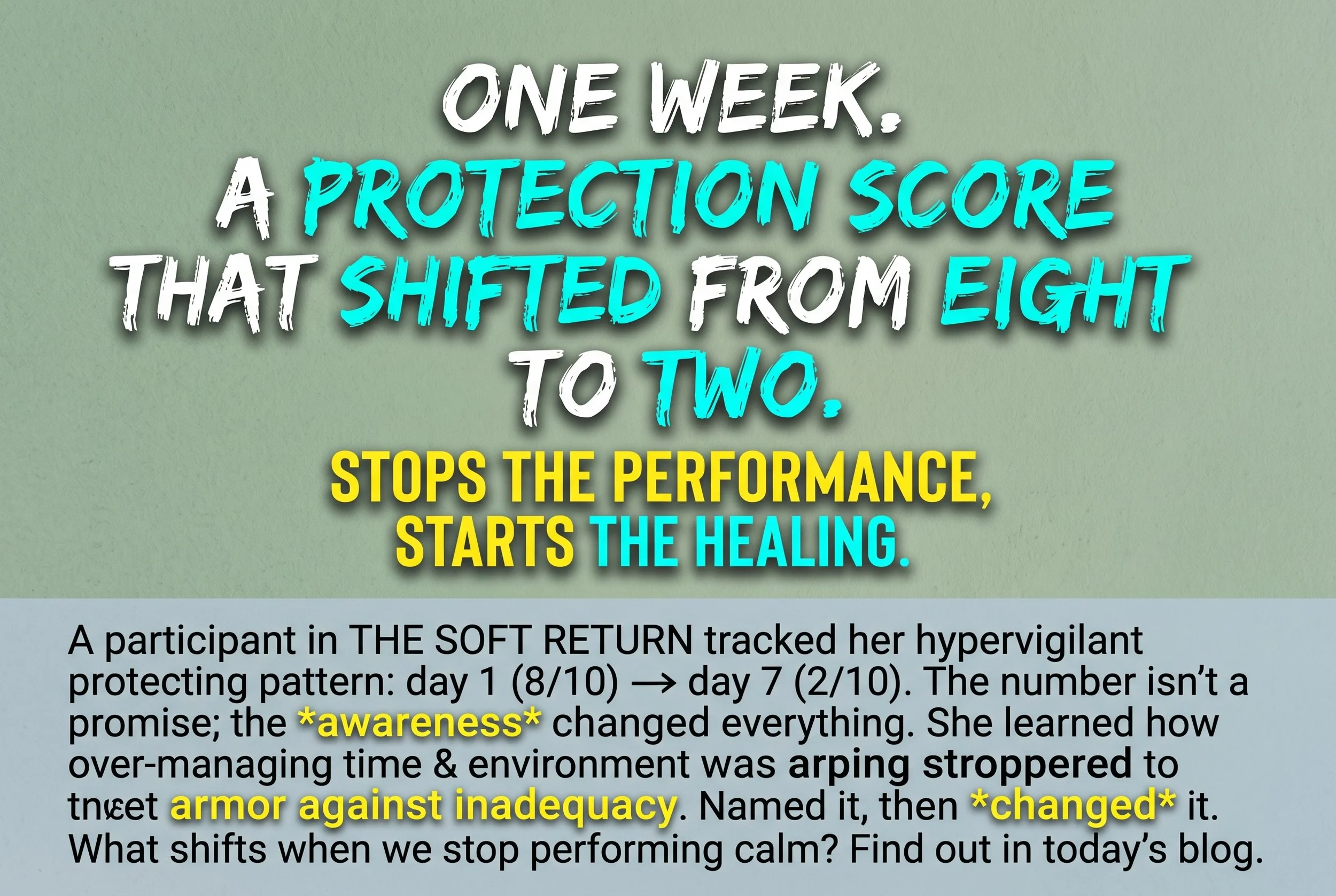
What Happens When We Stop Performing Calm? (A 7-Day Reflection)
Stop pretending you’re fine.
You’re not "peaceful"—you’re just high-functioning anxious in aesthetic activewear.
That urge to micro-manage your entire schedule, obsess over every detail, and scan the room to anticipate everyone else’s mood before they even speak? That’s not a cute personality trait. That’s your nervous system wearing full tactical armor because it’s convinced that if you un-clench for five seconds, everything breaks.
You are exhausting yourself trying to perform calm instead of actually feeling safe.
We tracked a client whose system was locked in an 8/10 hyper-alert survival state. Seven days later? Down to a 2/10. Not because she did a 10-step self-care routine, but because she called out her control habits for what they actually were: survival mechanics against feeling inadequate.
Drop the armor. Stop faking the chill. Link in bio to read what shifts when you actually unclench.
Why You Go Quiet When Life Gets Too Much (Hint: You’re Not Lazy, You’re Shutting Down)
STOP CALLED IT LAZINESS. YOU’RE SHUTTING DOWN. 🚨
Ever just… unplug mid-conversation? Someone asks you what you want for dinner or sends a single text, and your brain instantly goes completely blank, numb, and 10,000 miles away?
Yeah. That’s not a personality flaw. That’s The Shutdown Clencher.
When your nervous system realizes it can’t fight, fix, or overthink its way through one more fucking thing, it slams the emergency brake to keep you from exploding. You aren't being hostile, rude, or lazy—your internal circuit board literally tripped the breaker.
Stop lecturing yourself for going quiet. Next time you feel the fog roll in:
Hand on your chest.
Ask: “What do I need right now?” (Hint: It’s usually water, silence, or zero performance).
Unclench your jaw, stop forcing the hustle, and stop apologizing for your body keeping you alive.
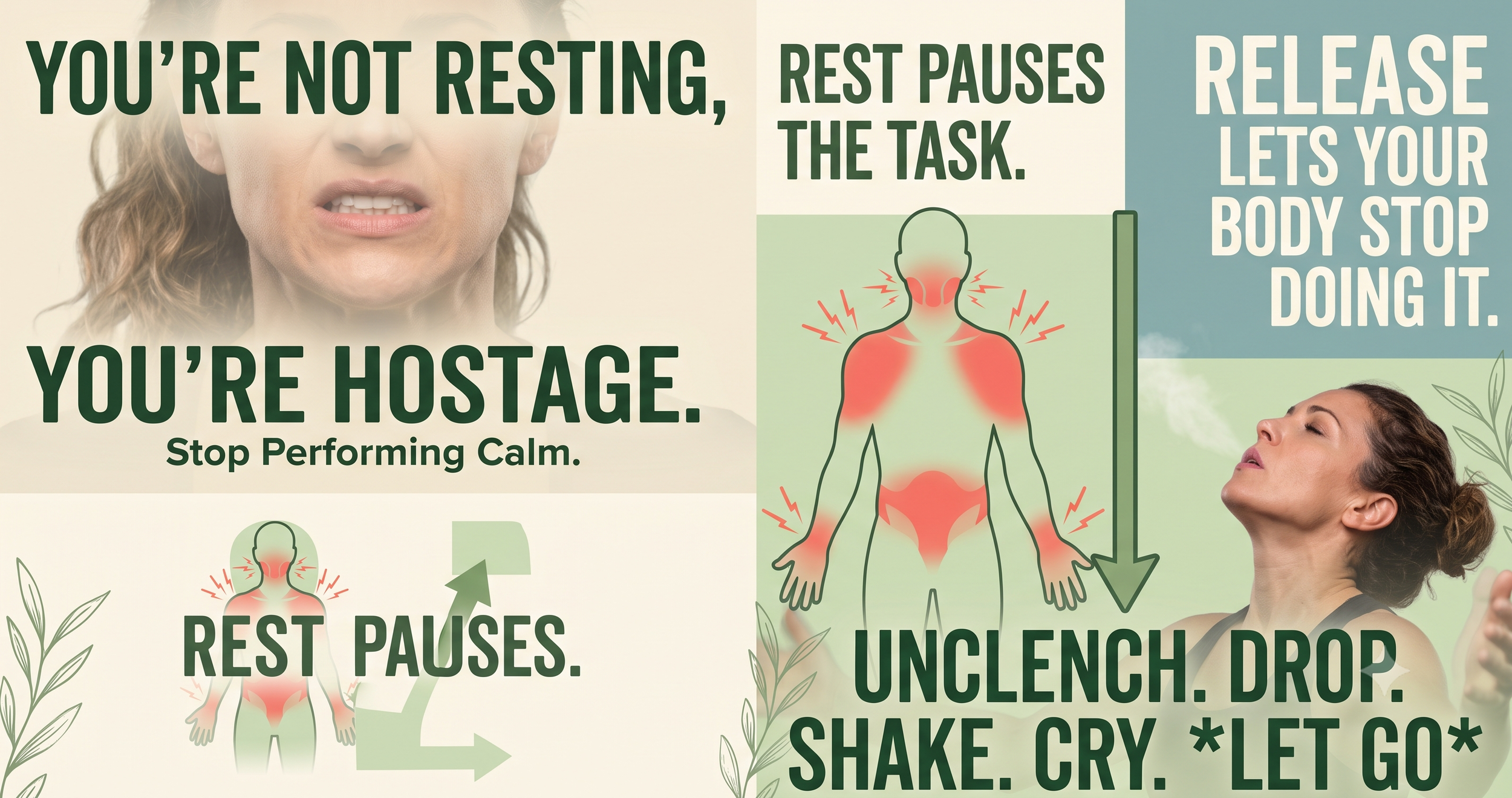
Rest Pauses the Task. Release Lets the Body Stop Doing It.
You’re not lazy. You’re just holding your fucking breath.
Stop calling it "rest" when your shoulders are living up by your ears and your jaw is grinding down to the bone.
Sitting on the couch with forty-two mental tabs open while screaming at yourself to "just relax" isn't self-care. It’s hostage negotiation.
Rest pauses the task.
Release lets your nervous system stop running from a threat that isn't even in the room anymore.
If taking a break leaves you feeling guilty, wired, or more exhausted than when you sat down, your body isn't resting—it’s chronically braced for impact.
Your calendar stopped. Your body didn't.
Unclench your teeth. Drop your shoulders. Read the latest post to figure out why your body refuses to turn off, and choose one way to actually let the pressure out today.

The Big Fat Lie of Your 5-Year Plan (And the Somatic Blindspot Sabotaging It)
The Somatic Blindspot of Strategic Planning
Stop editing your 5-year plan from a state of physical panic.
You don’t have a strategy problem. You have a nervous system capacity problem.
When your body is trapped in a hyper-aroused threat response, your executive functioning drops through the floor, your vision narrows, and you default to survival-based decisions. You aren't building an empire; you're just frantically trying not to get eaten by an imaginary tiger.
Your body cannot hear clarity when pressure is shouting. Lower the physiological pressure first. Then look at the map.
👉 Read the full breakdown: jgrovewellness.com/blog/somatic-blindspot 👉 Ready for a complete somatic overhaul? Apply for The Art of Wellbeing private coaching.
Venting is Not the Problem. (Seriously, Stop Choking on Your Own Words)
"I don't coach clients to be 'grounded' or 'serene.' I coach them to vent constructively so their bodies stop weaponizing unexpressed energy inward. When you swallow your anger to remain palatable, it doesn't disappear; it converts into inflammation and profound fatigue. Stop choking." — J. Grove Wellness